Psoriasis Treatment in Nandyala
Psoriasis is a chronic autoimmune skin condition causing thick, scaly plaques that can be both physically uncomfortable and emotionally distressing. Dr. Sireesha at Yashvini Skin & Hair Clinic, Nandyala, offers a full range of treatments from topical therapy to advanced biologics.
What Is Psoriasis?
Psoriasis is a chronic, immune-mediated inflammatory disease in which an overactive immune system accelerates the skin cell lifecycle. Normal skin cells take about 28–30 days to mature and shed; in psoriasis, this cycle is compressed to just 3–5 days. The result is a build-up of skin cells on the surface, forming thick, red, silvery-scaled plaques.
Psoriasis affects approximately 2–3% of the world's population and can develop at any age, though it most commonly appears between 15–35 years. It is a systemic condition — the same inflammatory process that affects the skin can involve the joints (psoriatic arthritis), eyes, and cardiovascular system. This makes comprehensive assessment and treatment important beyond just skin clearance.
Although the exact cause is not fully understood, psoriasis is clearly linked to genetic susceptibility combined with environmental triggers. It is not contagious. In South Indian patients, the condition can present with less silvery scaling (due to skin tone), making diagnosis important to differentiate from other conditions like seborrhoeic dermatitis or fungal infections.
Causes
Symptoms & Types
Plaque Psoriasis (Psoriasis Vulgaris)
The most common form, accounting for about 80% of cases. Raised, inflamed, red-to-pink patches covered with silvery-white scales. Appear on elbows, knees, scalp, and lower back. Can be itchy and sometimes painful.
Scalp Psoriasis
Affects the scalp in many psoriasis patients, ranging from mild flaking (mistaken for dandruff) to thick, crusted plaques covering the entire scalp. Can extend to the forehead, neck, and ears. Causes significant distress and social embarrassment.
Nail Psoriasis
Affects fingernails and toenails in up to 50% of psoriasis patients. Presents as pitting (small depressions), onycholysis (nail separating from the bed), yellowing, thickening, and crumbling of the nail. Associated with a higher risk of psoriatic arthritis.
Guttate Psoriasis
Small, drop-shaped lesions appearing suddenly, often after a streptococcal throat infection. More common in children and young adults. Many cases resolve spontaneously; others progress to plaque psoriasis.
Psoriatic Arthritis
An inflammatory arthritis occurring in up to 30% of psoriasis patients. Causes joint pain, stiffness, swelling, and can lead to joint damage if untreated. Joint involvement may appear before, with, or after skin disease. Requires rheumatological input.
Inverse / Flexural Psoriasis
Affects skin folds — axillae (armpits), groin, under the breasts, and buttocks. Presents as smooth, red, inflamed patches without the typical scaling due to friction and moisture. Common in overweight patients and can be confused with fungal infection.
Treatment Options at Yashvini Clinic
Topical Treatments
First-line therapy for mild to moderate psoriasis. Topical corticosteroids reduce inflammation and scaling. Vitamin D analogues (calcipotriol) slow skin cell growth and are especially effective when combined with a corticosteroid. Coal tar preparations reduce scaling and itching. Salicylic acid keratolytics help remove thick scale to improve absorption of other treatments.
NB-UVB Phototherapy
Narrowband UVB (311 nm) is the gold-standard phototherapy for moderate to severe psoriasis. It works by slowing the rapid skin cell turnover and modulating the immune response. Sessions are 2–3 times per week in clinic. A full course of 30–36 sessions produces excellent clearance. Particularly useful for widespread plaque and guttate psoriasis. Safe in pregnancy and for children.
Systemic Therapy: Methotrexate
An oral or injectable immunosuppressant used for moderate to severe psoriasis. Highly effective, especially for psoriatic arthritis. Requires regular liver function tests and blood counts. Contraindicated in pregnancy — reliable contraception is essential. Dr. Sireesha monitors patients closely on methotrexate.
Systemic Therapy: Cyclosporine
A potent immunosuppressant that rapidly clears severe psoriasis. Used for short-term control of very severe or erythrodermic psoriasis. Requires monitoring of blood pressure and kidney function. Not suitable for long-term use.
Biologic Therapy
Targeted injectable medications that block specific immune proteins (TNF-α, IL-17, IL-23) driving psoriasis. Examples include adalimumab, secukinumab, ixekizumab, and risankizumab. Biologics achieve clear or almost-clear skin in the majority of patients and dramatically improve quality of life. Suitable for moderate-to-severe psoriasis not controlled by other treatments. Dr. Sireesha assesses eligibility carefully.
Emollients and Scalp Treatments
Regular moisturiser use reduces scaling, reduces itch, and decreases the need for anti-inflammatory treatments. Scalp psoriasis is treated with medicated shampoos (coal tar, ketoconazole, salicylic acid), scalp solutions (clobetasol), and scalp phototherapy. Consistent emollient use is foundational to all psoriasis management.
What to Expect
Before Treatment
- A thorough clinical assessment by Dr. Sireesha to determine psoriasis type, extent (BSA %), and severity (PASI score).
- Screening for psoriatic arthritis — joint symptoms must be identified and addressed early to prevent joint damage.
- Baseline blood tests (full blood count, liver function, renal function, hepatitis B/C serology) before starting systemic therapy.
- Review of all current medications — some can trigger or worsen psoriasis.
- Assessment of comorbidities: obesity, hypertension, diabetes, and cardiovascular disease are more common in psoriasis patients.
- Discussion of lifestyle factors: alcohol reduction and smoking cessation significantly improve treatment response.
During Treatment
- Topical treatments applied as directed — applying to plaques only, not normal skin; use measuring tools (fingertip unit) for correct quantities.
- Phototherapy sessions attended as scheduled; missing sessions reduces efficacy. Protect eyes and genitals with appropriate shields during NB-UVB.
- Methotrexate or cyclosporine monitoring blood tests at regular intervals as directed.
- Biologic injections administered as per schedule; injection site rotation minimises discomfort.
- Report any new infections (especially respiratory), as these may need to be managed before continuing immunosuppressive therapy.
After Treatment
- Maintain emollient use daily even during remission to protect the skin barrier and reduce flare risk.
- Continue to attend monitoring appointments for systemic treatments — regular blood tests are not optional.
- Moderate sun exposure (15–20 minutes daily, avoiding sunburn) can help maintain remission.
- Manage lifestyle triggers: reduce stress, limit alcohol, maintain a healthy weight.
- Report any new joint pains or swelling promptly — psoriatic arthritis can develop at any time.
- Understand that psoriasis may relapse — a plan for managing future flares should be in place with Dr. Sireesha.
Benefits
Aftercare & Home Care
Frequently Asked Questions
తెలుగులో సమాధానాలు
Frequently Asked Questions — in Telugu & English
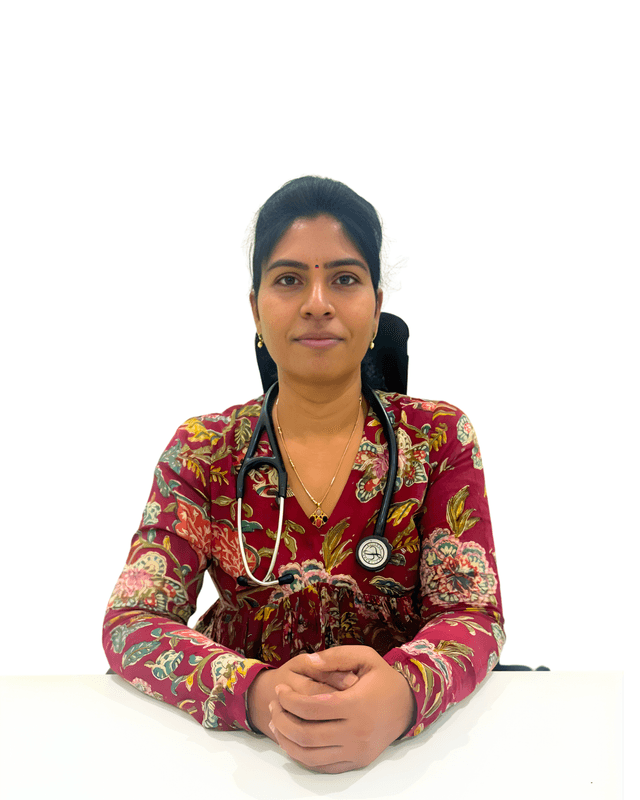
Struggling with Psoriasis in Nandyala? We Can Help.
Book a consultation with Dr. Sireesha at Yashvini Skin & Hair Clinic, Nandyala.